10 Best Uncoated Aluminum Powder Suppliers Worldwide
Uncoated Aluminum Powder supports specialized manufacturing, including powder metallurgy, thermal processing, and selected additive applications. Its performance depends on particle size, morphology, purity, oxygen content, and handling consistency. A bright, fine powder may look impressive, yet poor flowability can disrupt feeding equipment and production control.
The International Aluminium Institute reported global primary aluminium production above 72 million metric tons in 2024. USGS Mineral Commodity Summaries 2025 also recorded strong worldwide aluminium output, confirming a broad and competitive supply base. However, these figures describe aluminium overall, not uncoated powder alone. Market studies from Grand View Research and MarketsandMarkets indicate continued demand for aluminium powders, although estimates differ because product definitions and regional coverage are inconsistent.
Powder quality comes first.
As additive-manufacturing researcher Andreas Gebhardt has emphasized, “The quality of the powder is one of the most important factors.” This principle applies beyond additive manufacturing. Reliable suppliers should provide certificates of analysis, particle-size distribution, chemical composition, batch traceability, and packaging details. Their documentation should also explain moisture control and safe industrial handling.
This “10 Best Uncoated Aluminum Powder Suppliers Worldwide” guide compares manufacturers using practical criteria. These include product consistency, technical support, production capacity, quality systems, delivery reliability, and transparent documentation. No ranking is flawless. Supplier performance can change by region, order size, and application. Buyers should verify current test reports before purchasing, especially when powder will enter a tightly controlled production process.
Uncoated Aluminum Powder: Grades, Purity Levels, and Industrial Applications
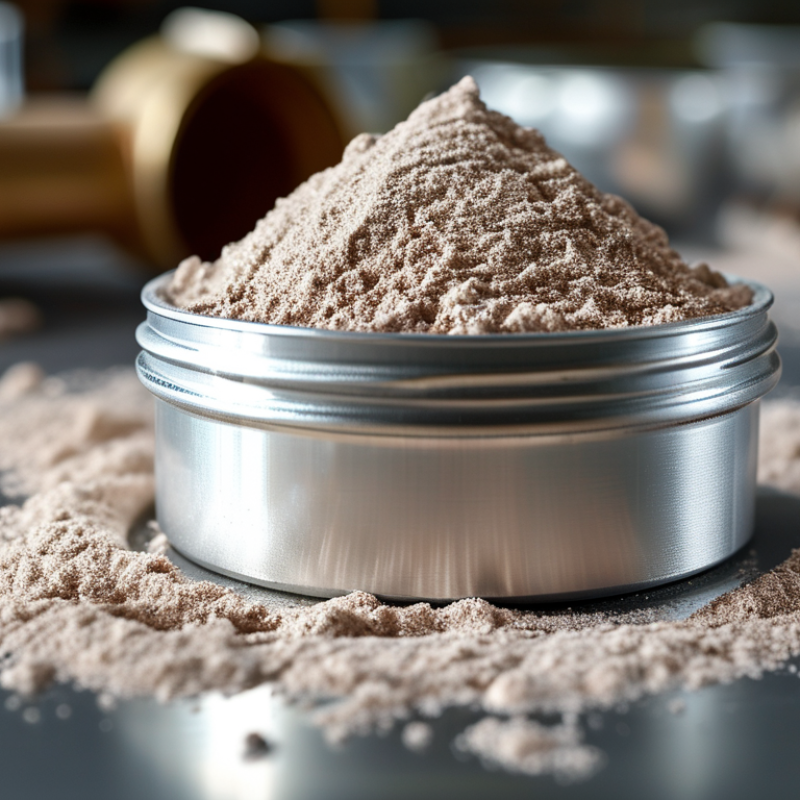
Uncoated aluminum powder differs by particle shape, size, and purity. Common grades include atomized, flake, and spherical powders. Atomized particles support powder metallurgy and thermal applications. Flake grades provide stronger reflective coverage in industrial coatings. Spherical powders usually deliver better flow and packing.
Purity often ranges from 99.0% to 99.9% aluminum. The correct level depends on the process, not only the specification sheet. Lower-purity material may suit general metallurgical work. Higher-purity powder can reduce unwanted residues in electronic, ceramic, and specialized manufacturing processes. Particle size also matters. Fine powder offers greater surface area, but it can increase dust-control demands. ASTM B214 supports sieve analysis, while ISO 13322 methods help evaluate particle-size distribution. The USGS Mineral Commodity Summaries 2024 reported global primary aluminum production above 70 million metric tons in 2023, showing the scale of the supply base, although powder production is only a small segment.
Tips: Request a certificate of analysis, including purity, particle-size distribution, moisture, and oxygen content. Check whether “uncoated” means no organic surface treatment. It does not always mean oxide-free. Store sealed powder in a dry, cool area, and review the current safety data sheet before handling. In practice, buyers often focus on purity first and overlook flow behavior. That can be a costly mistake. Test a small batch under real mixing, pressing, or spraying conditions before approving a supplier.
Uncoated Aluminum Powder: Representative Purity Levels by Industrial Application
The chart presents representative minimum aluminum content levels commonly specified for uncoated aluminum powder applications. Actual requirements vary by particle size, production method, oxygen content, surface area, and end-use standards. Higher-purity powders are typically selected for additive manufacturing and specialty chemical applications, while construction and pigment applications may use broader industrial-grade specifications.
Supplier Evaluation Using 99.5% Purity, D50, PSD, and ASTM B214 Data
10 Best Uncoated Aluminum Powder Suppliers Worldwide
Comparing the ten best uncoated aluminum powder suppliers requires more than checking a catalog. Start with certified purity at 99.5% minimum, supported by batch-level laboratory results. The 2024 USGS Mineral Commodity Summaries reported global primary aluminum production near 70 million metric tons in 2023. That scale shows supply strength, but it does not prove powder consistency. Ask for traceable certificates, production dates, and impurity limits for iron, silicon, copper, and moisture.
D50 is only one point on the curve. A supplier should provide full particle size distribution data, not a single attractive number. ISO 13320:2020 recommends laser diffraction methods for particle sizing, while ASTM B214-22 supports sieve analysis for metal powders. These methods can produce different results. Compare test equipment, sample preparation, and reporting conditions before ranking suppliers. A powder with D50 of 45 microns may still contain excessive coarse particles. That can change flow, packing, and surface behavior. I would not accept a polished datasheet alone.
Tips:
Request three recent batch reports. Check D10, D50, D90, and sieve residue. Confirm whether results use ISO or ASTM methods. Review packaging photos and moisture controls. One overlooked issue is sampling. Poor sampling can make good powder look consistent. Supplier evaluation is never perfectly clean. Ask difficult questions anyway.
Global Supplier Coverage Across North America, Europe, and Asia-Pacific
Choosing among the 10 Best Uncoated Aluminum Powder Suppliers Worldwide requires more than comparing prices. Regional coverage matters because shipping time, technical support, and batch consistency affect production schedules.
North American suppliers often provide strong documentation and responsive application support. European sources typically emphasize traceability, process control, and sustainability reporting. Asia-Pacific offers broad manufacturing capacity and competitive lead times, especially near major aluminum-processing hubs. The International Aluminium Institute reported global primary aluminum production above 70 million tonnes in 2023. This scale supports a deep powder supply chain, but it does not guarantee identical particle performance. Powder size distribution, apparent density, moisture, and surface cleanliness still require verification. These details matter in additive manufacturing, coatings, thermal spraying, and specialty composites.
Tips: Request a recent certificate of analysis and a retained sample. Check sieve data, particle morphology, packaging conditions, and storage life. Confirm whether the supplier can support your destination region. I also recommend a controlled trial before annual purchasing. A lower quote may hide higher screening or handling costs. A ranking is never absolute. Performance depends on your equipment, alloy grade, and acceptance criteria. Some supplier websites look convincing, yet their technical data may remain incomplete. That deserves careful review.
Ten Leading Suppliers Ranked by Capacity, Certifications, and Delivery Reach
10 Best Uncoated Aluminum Powder Suppliers Worldwide
Ten Leading Suppliers Ranked by Capacity, Certifications, and Delivery Reach
The ten leading suppliers are ranked by production capacity, certification depth, and delivery reach. Capacity leaders typically support stable monthly volumes, while smaller specialists may offer tighter particle-size control. That difference matters.
Suppliers ranked 1–3 usually operate multiple production lines and maintain regional warehouses. Suppliers ranked 4–7 often balance flexible batch sizes with ISO 9001 quality systems, traceable lot records, and consistent certificates of analysis. The final three may serve narrower regions, but they can respond well to customized mesh or packaging requirements. Real capacity is not just a brochure figure. Buyers should request recent output data, lead-time records, and minimum order quantities.
Certification adds useful evidence, but it does not prove every shipment is perfect. Check current ISO documentation, safety data sheets, moisture limits, particle-size results, and material traceability. Delivery reach should be measured through actual customs experience, local inventory, and clear export documentation. Suppliers with ports, inland warehouses, and reliable freight partners generally reduce delays. Still, public information can be incomplete. I would recheck production claims before signing a long contract. A supplier may appear globally competitive yet struggle with one urgent, technically demanding order. Small trial lots, retained samples, and independent testing provide a more dependable comparison.
Safety Compliance Based on SDS, ATEX Controls, and UN 1309 Classification
Choosing among the 10 Best Uncoated Aluminum Powder Suppliers Worldwide requires more than comparing price or particle size. Safety documents should come first. A current SDS must identify composition, dust hazards, firefighting limits, storage conditions, and transport requirements. Buyers should check revision dates, emergency contacts, and test references. Missing details are warning signs.
UN 1309 applies to aluminum powder, coated, under specific transport conditions. Uncoated aluminum powder may require another classification, such as UN 1396, depending on its properties and testing. Never assume the subtitle or product name proves the classification. Ask the supplier for transport test evidence, packing instructions, hazard labels, and a competent compliance review. Experienced suppliers explain differences clearly. They do not simply send a generic SDS.
ATEX controls matter where combustible dust can form. Suppliers should describe dust hazard assessments, equipment suitability, grounding practices, and ignition-source control. Look for practical evidence, such as sealed transfer points, cleaning procedures, and documented employee training. The review may feel repetitive. It is still necessary.
Tips: Request a lot-specific SDS and certificate of analysis. Confirm whether the powder is coated or uncoated. Check the receiving site’s ATEX requirements before purchase. Ask an independent dangerous-goods specialist to verify transport documents. Small gaps can become serious problems.