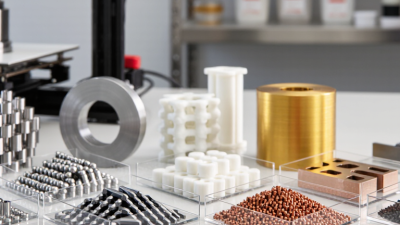
Buying Alsimg Alloy Powder online is not simply a price comparison. It is a material verification exercise. The Wohlers Report 2024 valued the global additive manufacturing industry at approximately $20 billion in 2023. That growth increases demand for dependable metal powders, but it also increases supplier confusion. Product pages may show attractive images, yet omit oxygen content, particle-size distribution, or lot history.
Dr. Mohsen Seifi of ASTM International has repeatedly emphasized, “Standardization is essential for industrial adoption.” His point matters here. A reliable purchase should connect the powder to recognized testing methods, documented production controls, and a clear application target. Request the certificate of analysis before paying. Check chemistry, morphology, apparent density, flowability, moisture, and sieve results. A clean 1-kilogram sample can still hide inconsistent particles.
Small details matter. Look for sealed packaging, batch numbers, manufacturing dates, and storage instructions. Compare the seller’s technical sheet with ASTM or ISO requirements, where applicable. The U.S. Geological Survey’s Mineral Commodity Summaries also reminds buyers that aluminum supply depends on complex global processing and trade networks. Delivery risks are real.
My own caution is simple: online confidence can be premature. A polished website proves very little. Ask for independent test evidence, not only marketing language. Also confirm whether “Alsimg Alloy Powder” refers to a defined alloy grade or a supplier-specific name. That distinction may affect printing parameters, safety procedures, and final performance. Five minutes of questioning can prevent an expensive batch mistake.
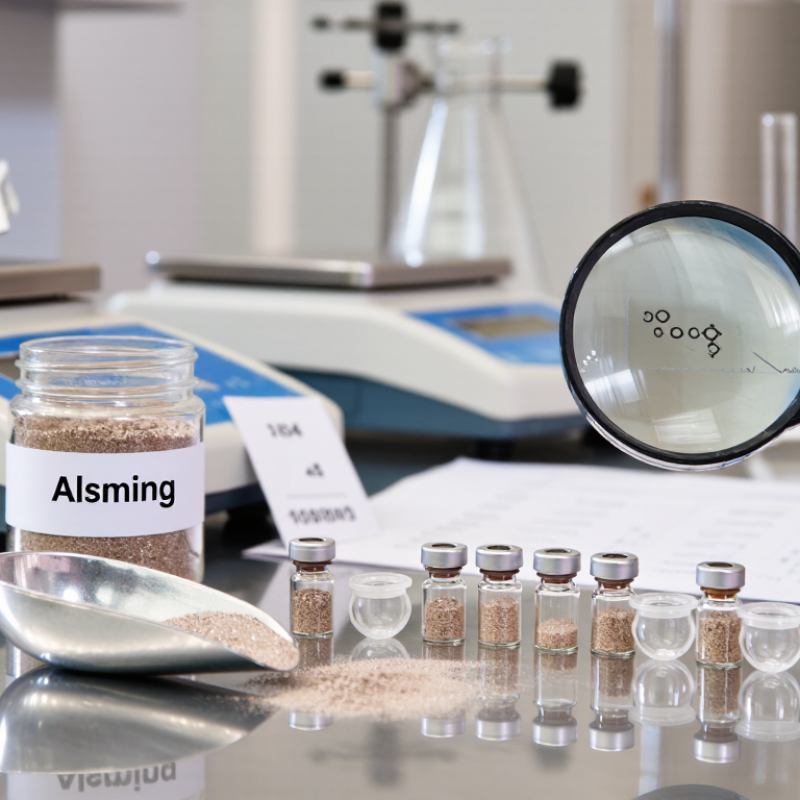
AlSiMg alloy powder is an aluminum-based material containing silicon and magnesium. Silicon improves fluidity and reduces solidification shrinkage. Magnesium supports strength after suitable heat treatment. The exact balance matters, because small chemistry changes can affect density, cracking, and surface finish.
This powder is widely used in laser powder bed fusion. Engineers use it for lightweight brackets, housings, heat exchangers, and functional prototypes. Its low density helps reduce component weight, while its thermal conductivity supports some cooling designs. Printed parts still require careful parameter control, including laser power, scan speed, layer thickness, and build orientation. Good powder cannot repair poor processing.
When buying online, examine the alloy designation, particle size distribution, morphology, oxygen level, moisture data, and lot traceability. Spherical particles usually flow more evenly through a recoater. Excessive satellites or irregular particles may create unstable powder layers. A certificate of analysis, safety data sheet, and clear packaging information should be available. Packaging matters: sealed containers and dry storage help protect powder quality.
Online descriptions can look convincing. They are not enough. Ask whether the powder is virgin, recycled, or blended, since reuse may alter flow and oxygen content. Check compatibility with your printer and qualification method. I would also compare several lots, not only one sample. That step is easy to skip, yet it can expose variability before production begins. unerquicklich

Before buying AlSiMg alloy powder online, define the exact alloy grade. AlSi10Mg is common, but its silicon and magnesium levels can vary by specification. Request a certified chemical analysis, not only a product title. ISO/ASTM 52907 recommends documenting powder chemistry, morphology, size distribution, flowability, and recyclability. These details affect melt behavior and final strength.
Tip: Write a purchasing specification first. Include alloy grade, particle-size range, purity limits, oxygen content, moisture, and test methods. For laser powder bed fusion, 15–45 micrometers is a frequent working range, but your machine manual must decide. A wider distribution may improve packing, yet oversized particles can reduce surface quality. I have seen buyers focus on price and overlook sieving records. That mistake is easy to repeat.
Purity needs numerical limits. Ask for oxygen, hydrogen, iron, and copper values, plus batch identification. A certificate should state test dates and laboratory methods. The 2024 Wohlers Report valued the global additive-manufacturing industry at approximately 20.0 billion dollars in 2023, increasing pressure for faster online purchasing. Speed is useful, but traceability matters more.
Tip: Compare at least two batch certificates. Check apparent density, Hall flow, particle images, and packaging condition. This may feel excessive. It is not.
Buying Alsimg alloy powder online requires more than comparing prices. Examine the supplier’s legal registration, manufacturing address, technical staff, and years of documented experience. Ask whether production occurs in-house or through an undisclosed subcontractor. A credible supplier should provide traceable batch numbers, responsive technical support, and clear storage instructions.
Product data deserves careful checking. Request a current certificate of analysis showing alloy composition, particle-size distribution, morphology, moisture, and oxygen levels. Confirm the test methods and laboratory identity. Ask for a representative sample before placing a large order. Small details matter. The powder should arrive in sealed, labeled packaging with the lot number matching the documents. Do not accept vague phrases such as “industrial grade” without measurable specifications.
Quality certifications can strengthen confidence, but they are not automatic proof of every batch. Check the certificate number, scope, issuing body, and expiration date independently. An ISO 9001 certificate may demonstrate process control, while independent laboratory testing can verify chemistry and contamination limits. I once treated a polished certificate as enough evidence; that was careless. It did not confirm particle performance. Now, I compare the certificate of analysis with sample results and ask how deviations are handled. Ask for the original. Also review safety data, transport requirements, and applicable import rules before payment. Clear records, honest limitations, and consistent answers reveal more than attractive website claims.
Evaluate supplier credentials, product data, and quality certifications before placing an order. The chart shows the number of evidence checks included in each buying tip.
Use this checklist to compare documentation quality, material consistency, traceability, packaging, and certification evidence. The values represent checklist evidence items, not supplier ratings.
10 Tips for Buying Alsimg Alloy Powder Online
Begin with the exact alloy grade, particle size, and purity required for your process. A low price means little if the specification is unsuitable. Request a current certificate of analysis, batch number, and test method. Compare prices by kilogram, not by advertised package size. Include taxes, inspection charges, and payment fees in the calculation. Very cheap offers deserve careful questions.
Review packaging details before ordering. Ask whether the powder comes in sealed, moisture-resistant containers with clear labels. Check the net weight, production date, and lot identification. Packaging should protect the material during handling and storage. I once focused too heavily on unit price and overlooked repacking costs. That was an avoidable mistake.
Read shipping terms line by line. Confirm dispatch time, carrier responsibility, insurance, and delivery conditions. Ask how damaged or delayed parcels are handled. Do not assume shipping is included. Obtain a written quotation. Storage instructions should mention temperature, humidity, ventilation, and separation from incompatible materials. Follow the supplier’s safety data sheet and your workplace procedures. Keep containers closed and inspect them on arrival. Store carefully. Compare at least three offers, but do not choose on price alone. A supplier with clear documentation may reduce technical and operational risk. Some details remain uncertain until a sample is evaluated, so a small trial order can be sensible.
| No. | Buying Tip | Comparison Dimension | Practical Data or Benchmark | Documents or Questions to Request | Risk-Control Check |
|---|---|---|---|---|---|
| 1 | Define the exact alloy grade | Chemical composition and application | Confirm that the material is an aluminium–silicon–magnesium alloy and specify the required Si, Mg, Fe, Cu, Zn, and other impurity limits. The target composition should match the intended additive-manufacturing or powder-processing process. | Ask for a current certificate of analysis, product specification, and batch identification. | Do not compare prices for powders with different alloy chemistry or quality grades. |
| 2 | Compare price on an equal basis | Price per usable kilogram | Compare the same alloy, particle-size range, quantity, test standard, and delivery term. Calculate: total landed cost ÷ net usable powder weight. A low quoted price may exclude packaging, inspection, freight, customs, or taxes. | Request a quotation showing currency, minimum order quantity, payment terms, validity period, and all additional charges. | Treat unusually low prices as a reason to verify traceability, test data, and powder condition. |
| 3 | Match particle size to the process | Particle-size distribution | Common powder-bed-fusion specifications may use ranges such as 15–45 µm or 20–63 µm, but the correct range depends on the machine, layer thickness, recoater, and process parameters. | Request D10, D50, D90 values, test method, and a particle-size distribution report for the actual batch. | Avoid relying only on a nominal mesh size; broad or inconsistent distributions can affect flow and layer uniformity. |
| 4 | Check morphology and flowability | Particle shape, satellites, and flow | Gas- or plasma-atomized powder is commonly selected for its predominantly spherical particles and improved flow. Hall flow, apparent density, tap density, and morphology should be evaluated together. | Ask for microscopy images and flowability, apparent-density, and tap-density results using stated test methods. | Excessive satellites, irregular particles, or agglomerates may cause poor spreading and unstable powder feeding. |
| 5 | Verify oxygen, moisture, and contamination data | Powder cleanliness and reactivity | Ask for oxygen, nitrogen, hydrogen, moisture, and metallic impurity results. Aluminium powder can present combustible-dust hazards, and moisture or contamination may influence processing and final-part quality. | Request a batch analysis, moisture result, handling instructions, and the latest safety data sheet. | Do not accept “high purity” without numerical limits and a defined analytical method. |
| 6 | Inspect the packaging specification | Pack size, seal, and atmosphere | Suitable packaging is normally moisture-resistant, tightly sealed, and compatible with metal powder. Small research quantities may be supplied in sealed containers; larger quantities may use drums or other approved bulk packaging. | Confirm net weight, inner and outer packaging, tamper evidence, inert-gas filling if specified, and whether the container can be resealed. | Reject damaged, bulging, leaking, unsealed, or unlabeled containers. |
| 7 | Compare shipping terms, not just freight cost | Incoterms, transit time, and customs responsibility | Compare EXW, FCA, CPT, CIP, DAP, or other quoted terms on the same basis. Confirm dispatch location, estimated transit time, insurance coverage, customs responsibility, and delivery destination. | Request a pro forma invoice, packing list, commercial invoice, country of origin, and applicable transport classification. | Shipping requirements vary by powder characteristics and jurisdiction; use the current safety data sheet rather than assuming ordinary-parcel service is acceptable. |
| 8 | Review lead time and batch freshness | Availability, production date, and shelf life | Separate “in stock” material from made-to-order material. Lead time should include production, testing, packaging, export clearance, and transport. Shelf-life guidance depends on packaging and storage conditions. | Ask for production date, retest date if applicable, stated shelf life, and the committed dispatch date. | Do not purchase more powder than can be properly stored and consumed within the supplier’s recommended period. |
| 9 | Plan safe storage before ordering | Temperature, humidity, ignition control, and segregation | Keep sealed powder in a cool, dry, well-ventilated area, protected from water, high humidity, heat, sparks, flames, and incompatible materials. Follow the supplier’s safety data sheet and local combustible-dust rules. | Confirm recommended temperature and humidity limits, container orientation, grounding requirements, spill procedures, and approved fire-control methods. | Never use compressed air to disperse spilled metal powder unless the applicable safety procedure specifically permits it. |
| 10 | Buy a sample before a large order | Incoming inspection and process validation | Test a representative sample for chemistry, size distribution, morphology, flowability, density, moisture, and actual machine performance before approving production quantities. | Agree on acceptance criteria, sample quantity, inspection responsibility, replacement policy, and treatment of nonconforming material. | Keep retained samples and batch records so future deliveries can be compared with the approved reference. |
Note: Pricing, transport classification, packaging, shelf life, and storage limits vary by alloy specification, particle-size distribution, quantity, destination, and applicable regulations. Always confirm the current quotation and safety data sheet for the exact batch.
When buying Alsimg alloy powder online, request a recent certificate of analysis before discussing price. It should show chemical composition, particle-size distribution, oxygen, nitrogen, hydrogen, moisture, and lot number. Ask for test methods, not only pass-or-fail results. ASTM International standards can help verify sampling and powder characterization procedures.
The 2024 Wohlers Report valued the global additive manufacturing industry at 20.035 billion dollars in 2023, with 13.5% annual growth. That expansion increases supplier choice, but it also makes document checking more important. Compare the certificate with the product specification and your printer’s qualified process window. A powder labeled “recycled” is not automatically unsuitable. However, the seller should disclose reuse history, blending ratios, sieving records, and storage conditions. Small details matter.
Check the sealed container.
Confirm packaging date, batch traceability, and tamper evidence. Ask whether an independent laboratory performed the tests. ISO 9001 certification supports process control, but it does not prove every batch meets your requirements. This distinction is easy to miss. Request sample availability, replacement terms, complaint response times, and technical support after delivery. A useful supplier can explain how humidity exposure affects flowability and apparent density. I would also ask for a written response to a failed test, because vague promises are not after-sales support. No supplier is perfect; my own review checklist once missed an outdated particle-size report. That mistake was avoidable.